


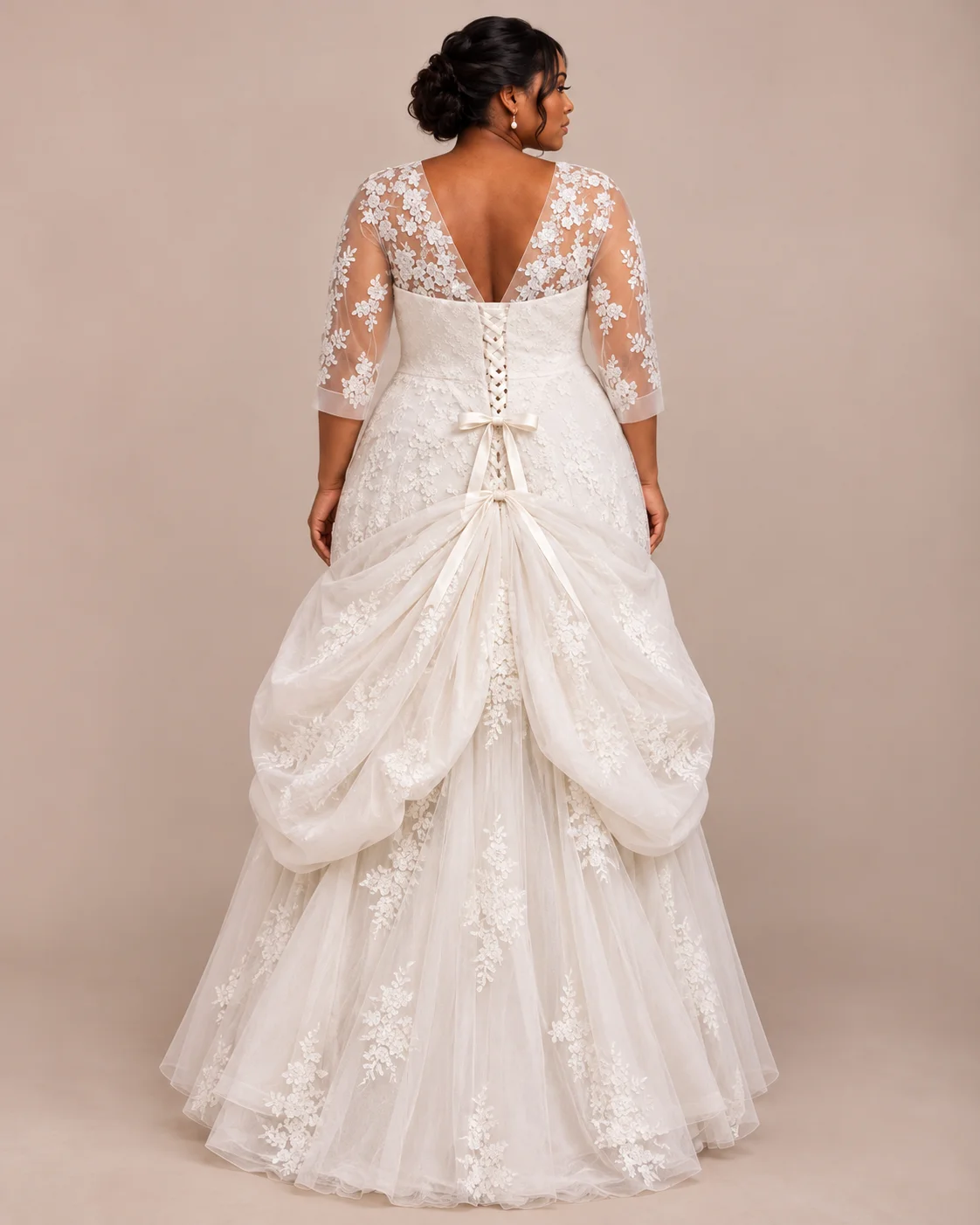
A wedding dress bustle lifts and secures a train so you can move more comfortably after the ceremony. It is usually planned during alterations, with the fastening arrangement chosen for the gown’s construction and the way you want the skirt to look. It is not a single accessory that works identically on every dress.
If your celebration moves from an outdoor ceremony in Lakewood Ranch to an indoor reception, or from Sarasota portraits to a Bradenton dinner, the bustle deserves a place in the timeline. The aim is simple: enjoy the train when you want it, then have a practical plan for walking, sitting, and dancing without carrying it all evening.
Decide Whether Your Gown Needs a Bustle
A train that extends behind you may need a way to lift or manage it once the formal photographs are finished. A short dress, a gown without a train, or a detachable train can present different options. Ask about the actual dress rather than assuming every wedding gown needs the same alteration.
Consider how you intend to use the gown throughout the day. Will you wear it through the reception? Change into another outfit? Walk over grass or along a waterfront before dinner? These details affect when the train needs attention and what arrangement will be convenient.
Bring those plans to an appointment for bridal alterations at Monica’s. A consultation can establish what the fabric and structure will support before you settle on a look based only on another bride’s photographs.
“Beach wedding” describes the setting, not necessarily the formality. A ceremony with your feet in the sand may be casual, while the reception could take place in an upscale waterfront ballroom. When an invitation specifies a dress code, follow that guidance first.
Understand the Main Bustle Approaches
An over-bustle lifts the train onto the skirt
Often called an American bustle, this approach gathers the train upward over the outside of the skirt. The placement and number of fastening points influence how the folds look. A simpler gown and a heavily detailed gown may need very different arrangements.
Ask to see the effect from the side and back as well as straight on. Pay attention to whether a lace motif disappears into a fold, how the volume sits, and whether the overall result feels like the same dress you chose. The name of the style matters less than the finished appearance on your gown.
An under-bustle gathers fabric beneath the skirt
Often called a French bustle, this approach secures the train underneath, changing the way the fabric gathers and drapes. It is an option to discuss rather than a rule for a particular silhouette. Fabric weight, layers, decoration, and construction all influence what is workable.
Other variations may be appropriate, including arrangements intended to create a more continuous hemline. Ask your alterations professional to demonstrate the possibilities. Trying to force a pictured bustle onto a differently constructed dress can create unnecessary complexity.
The fitting should include more than standing still in front of a mirror. Wear the shoes and undergarments you intend to use, or discuss any planned change before the work is finalized. Hem length and the way the gown sits can affect the overall result.
Once the proposed bustle is demonstrated, walk, turn, sit, and take a few careful dance steps if the fitter says it is appropriate. Notice whether you feel pulling, whether layers catch, and whether the train is clear of the floor as intended. Describe what you feel rather than trying to adjust the attachments yourself.
If you plan to change shoes during the reception, bring the second pair. A gown that clears the floor in one heel height can behave differently in another. That is an easier conversation during alterations than during the first dance.
Also look at the gown after sitting down and standing back up. The practical question is whether the arrangement suits the movements your celebration involves, not just whether it photographs well while motionless.
Teach the Person Who Will Help You
Choose a helper who will actually be available at the transition point in the day. A person who leaves with the photographer or coordinates another part of the event may be an inconvenient choice, even if they attended every earlier appointment.
Ask whether that person can attend the final fitting. Have them watch the demonstration and, with permission, practice the exact sequence. If recording is allowed, make a short video that shows the fastening locations clearly. A close view of the relevant details can be more useful than a full-length video taken from across the room.
Do not assume that another wedding dress tutorial applies. The number of layers, attachment points, and sequence can differ. Ask how any discreet labels or identifying details work, and make sure the helper knows which pieces belong together without pulling.
Put Bustling Into the Wedding-Day Schedule
Plan when you want the train down for photographs and when you want it secured. Allow a calm transition with enough room to move around the dress. Rushing in a crowded hallway makes an unfamiliar task harder than it needs to be.
Tell the photographer and coordinator about the plan so nobody expects the dress to be ready for two different activities at once. For an outdoor celebration, identify a clean, sheltered place where the helper can work. Avoid letting the train rest on wet or dirty ground while searching for a fastening point.
Ask the alterations professional what to do if a fastening comes loose. Do not rely on improvised repairs through delicate fabric. Keep the studio’s guidance with the helper so the response is specific to the gown rather than guessed under pressure.
Discuss Cost and Care Before Approving the Work
Request an estimate for the actual bustle and clarify what is included in the alterations plan. Complexity, layers, and construction can affect the work involved. A price from an online article is not a reliable quote for your dress.
After the celebration, tell the cleaner or preservation specialist about the bustle attachments and any damage. Follow the gown’s care instructions instead of assuming that steaming, spot cleaning, or ironing is safe for every fabric and trim. The American Cleaning Institute’s fabric-care guide helps explain care symbols. Discuss any delicate trim or specialized cleaning with the professional handling your gown.
Frequently Asked Questions About Mother of the Bride Dresses
Not always. Ask when purchasing the gown and again during alterations. The final arrangement may need to be tailored to your fit, train, and preferred appearance.
Yes, gathering the train changes the back of the skirt. Ask to see the proposed effect on your own dress before approving it.
That may be difficult because attachments are often behind or beneath the skirt. Plan for a helper unless your alterations professional demonstrates a practical alternative.
Usually when you are finished displaying the train and need easier movement. Coordinate that moment with photographs, dinner, and dancing rather than following a fixed rule.
Ask as early as possible. Changes may require additional work and time, so the final fitting is better used to confirm and practice an agreed plan.
Plan the Details With Monica’s
Brides in Lakewood Ranch, Bradenton, and Sarasota can contact Monica’s Bridal Boutique & Alterations to discuss their gown and alteration needs.
Bring your shoes, wedding-day plans, and questions about movement so the train is part of a dress you can enjoy throughout the celebration!